Concrete Driveway Leveling: What You Need to Know
A sunken concrete driveway is one of the most common concrete problems we see across Bannock County. Whether it's one panel that's dropped near the garage door, a section by the apron that's creating a bump every time you drive in, or a driveway that slopes toward the house and funnels water into your garage, concrete leveling can usually fix the problem without replacing a single slab.
Our driveway leveling service raises settled concrete panels back to the correct elevation, eliminating rough transitions, drainage problems, and damage risks to your vehicles. The process is completed in hours, not days.
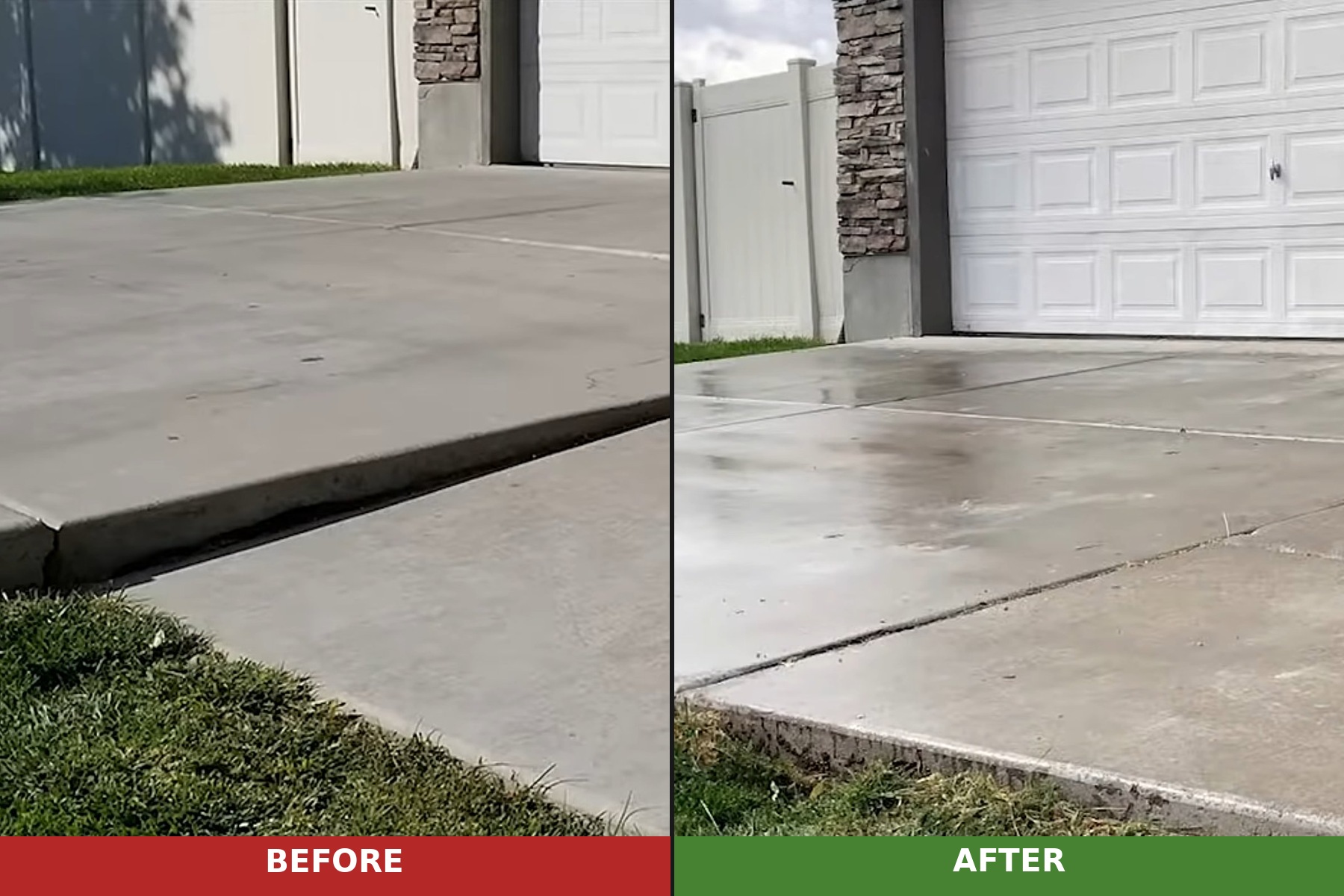
Common Driveway Problems We Fix
- Sunken panel near the garage: The most common call we get, one or more panels near the garage have dropped, causing a bump every time you pull in or out.
- Driveway apron settlement: The section of driveway that meets the street often settles independently, creating a jarring drop at the curb.
- Water pooling: When concrete settles unevenly, it changes the drainage pattern and allows water to pool on the surface, or worse, slope toward your foundation or garage.
- Low spots in the middle of the driveway: Caused by soil compaction or underground voids, these dips can collect water and accelerate freeze-thaw damage in Idaho winters.
- Cracked edges with separation: If slabs have separated at the joints and one side has dropped, leveling can close that gap and restore a smooth surface.
Why Not Just Replace the Driveway?
Replacing a concrete driveway is expensive. A typical two-car driveway replacement can run $4,000–$10,000 or more depending on size, access, and existing demo costs. And here's the thing: if the underlying soil issue isn't addressed, new concrete can settle just like the old concrete did.
Concrete leveling addresses the problem at the source, the void or loose soil beneath the slab, while preserving the structural concrete you already have. It's the smarter, more economical choice in most situations.
When Replacement Is the Right Answer
We believe in honest assessments. Sometimes replacement is the correct call, specifically when:
- The concrete slab is crumbling, spalling, or has deep structural cracks throughout
- The slab has broken into multiple pieces and can no longer be lifted as a unit
- The thickness of the original pour was insufficient to support the intended load
If your driveway falls into one of these categories, we'll tell you honestly during the free estimate rather than trying to sell you a leveling job that won't hold.
Driveway Leveling Near the Garage Door
The most problematic area on most driveways in this region is the panel or two immediately in front of the garage. Why? Because garage floors and driveway slabs are poured separately, the garage floor sits on the building's foundation, while the driveway slab is "floating" on compacted soil. When that soil settles or washes away, the driveway drops while the garage floor stays put. This creates the classic "bump" at the door threshold and can also damage your garage door bottom seal over time.
We specialize in lifting these dropped driveway sections back flush with the garage floor, often to within a quarter-inch or less. The result is a smooth, safe transition that protects your vehicle and your door.
How Long Does Driveway Leveling Take?
Most residential driveway leveling jobs are completed in 2–4 hours. Larger driveways with multiple settled sections may take a full day. In most cases, you can drive on the leveled area that same afternoon, making the downtime minimal compared to a new concrete pour.